Marine life
Marine wildlife calendar in Baja California Sur: what to see each month (and why)
A quick, month-by-month overview of the species that mark the natural calendar of Baja California Sur — and the reason behind each season.
A sea that changes its leading role
Baja California Sur doesn’t have a single season — it has several, and each one belongs to a different species. What sets the calendar isn’t the date on paper but a mix of migration, reproduction and food availability, which varies between the Pacific side and the Sea of Cortez.
This is a quick overview, from above; each species has its own article in this journal with the detail of why it happens exactly in those months.
Winter: the season of whales and the whale shark
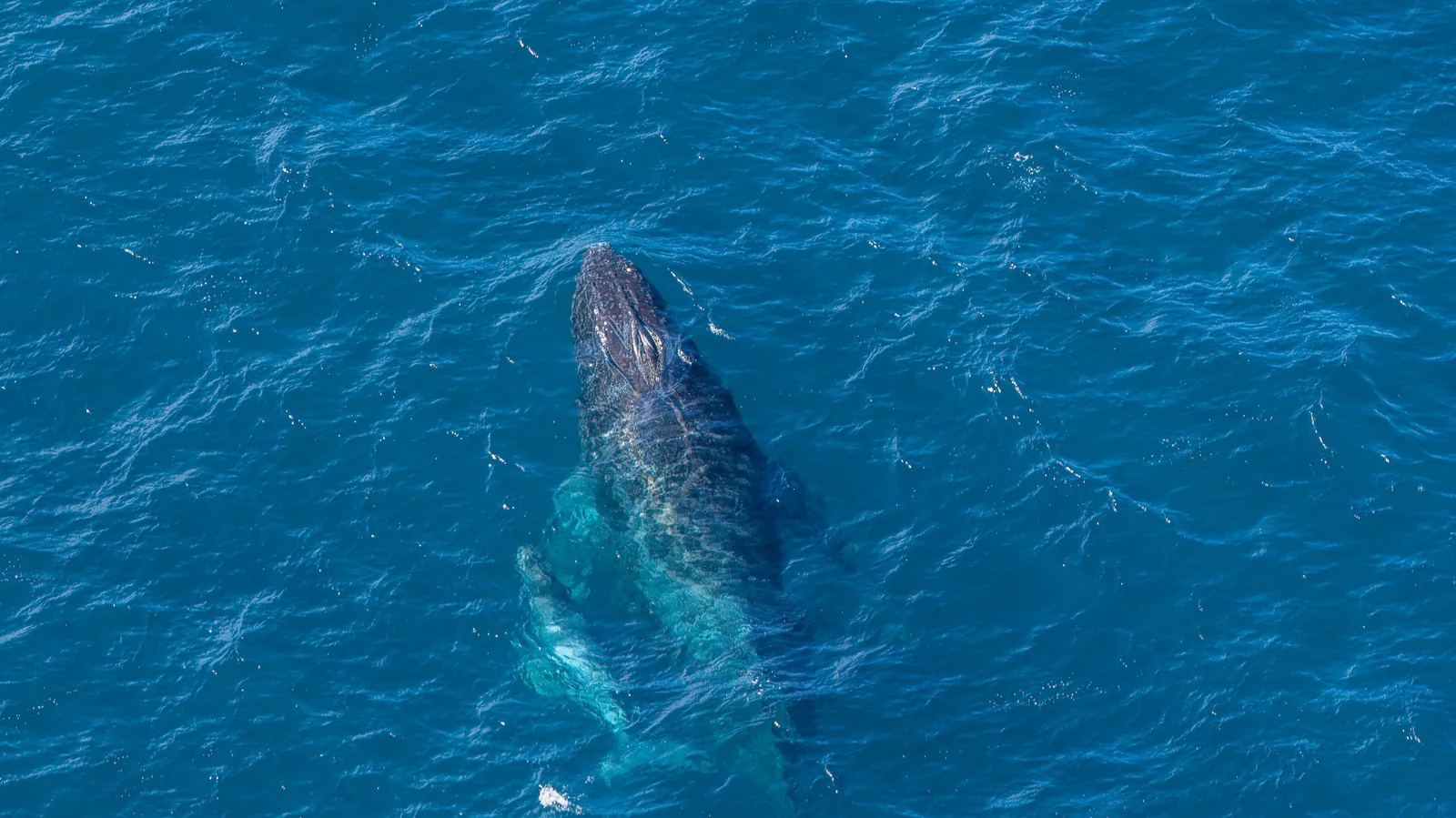
Between December and April, two whale species arrive in Baja California Sur after migrating thousands of kilometers from cold northern waters: the gray whale, which concentrates in Pacific lagoons such as Bahía Magdalena (with the highest presence around February-March), and the humpback whale, present mainly in the Gulf of California. Both stop feeding in any meaningful way during this stage and rely on fat reserves built up over summer.
In that same stretch of the year, but in a shorter window (November to January), juvenile whale sharks aggregate at the southern end of the Bay of La Paz, likely drawn by zooplankton blooms.
Spring and summer: mobulas and the Sardine Run
Between March and August, peaking in May, thousands of mobula rays gather for courtship and mating in La Ventana and the nearby Ensenada de Muertos, in the Sea of Cortez. It is one of the best-documented devil ray breeding events in Mexico.
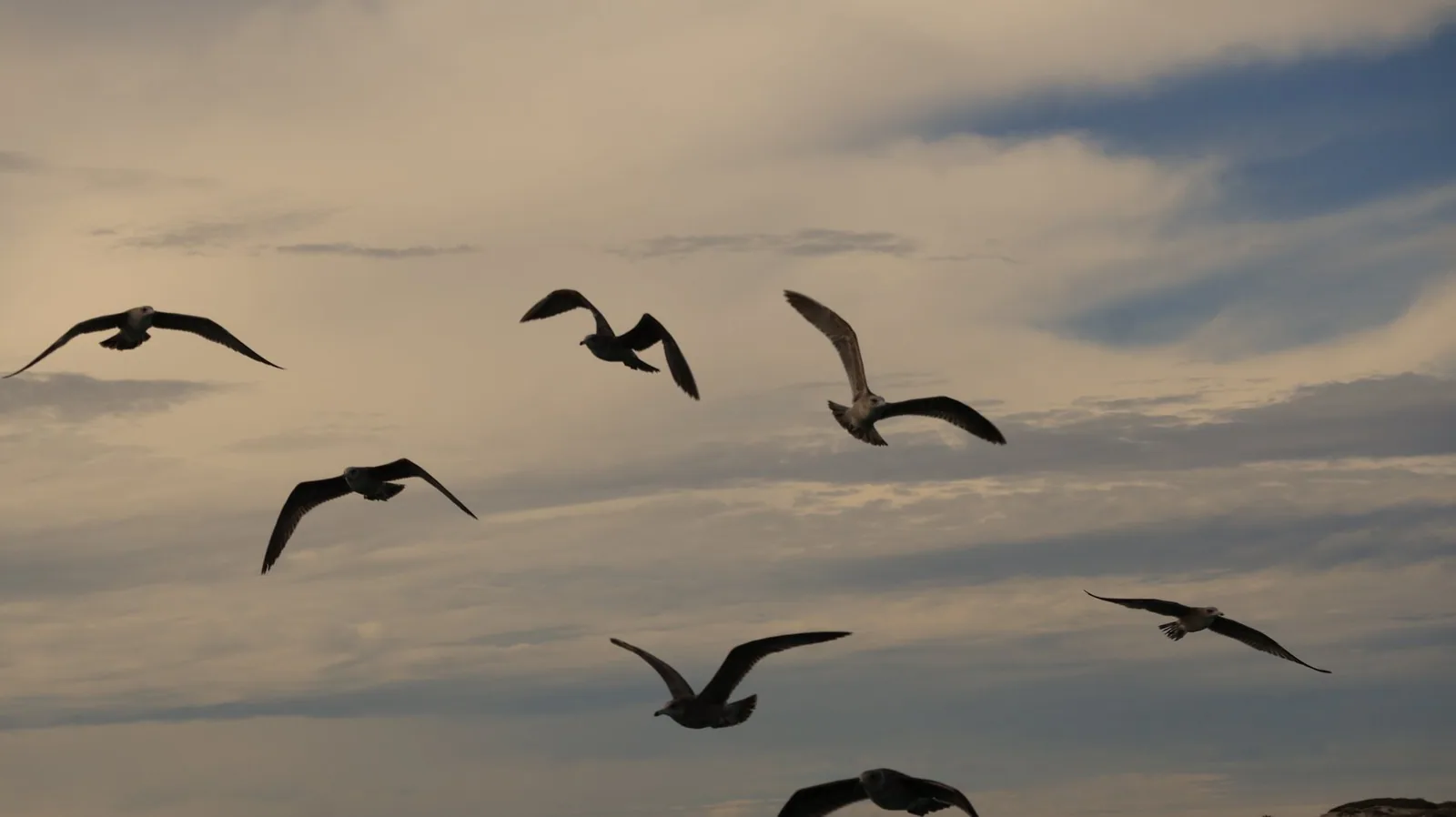
For a few weeks — which vary from year to year — the Sardine Run turns the Pacific off the peninsula into a hunt in broad daylight: sea lions, striped marlin and seabirds converge on schools of sardines compressed near the surface.
What doesn’t depend as much on the month
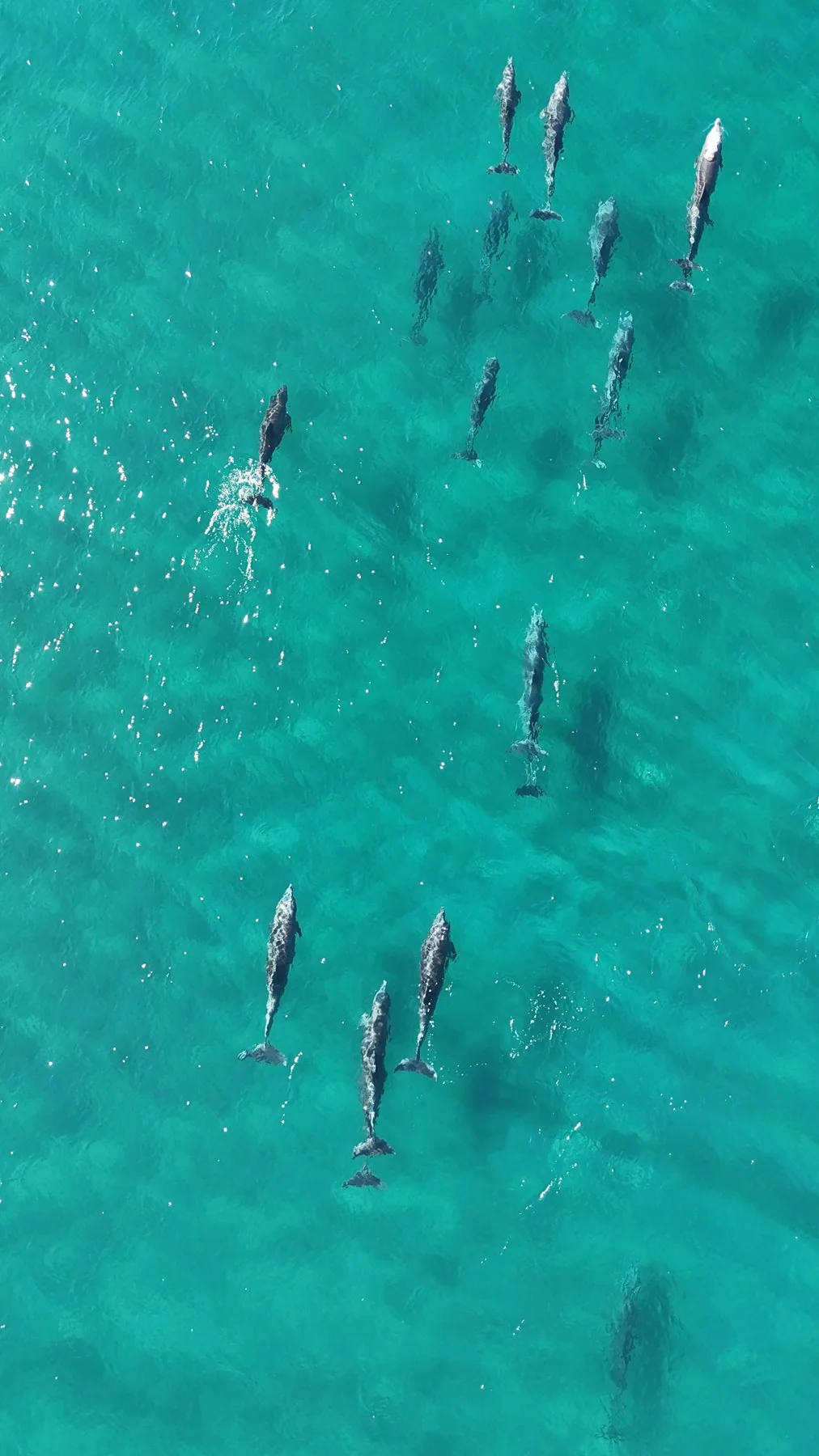
Not all marine life in Baja California Sur follows a strict calendar. Sea lions and dolphins are present in the Sea of Cortez for much of the year, and diving in warm water — on reefs like Cabo Pulmo — can be done across different seasons, though visibility and water temperature shift with the months.
The calendar guides; the sea decides
No date on this calendar is a guarantee. These are wild animals, ocean conditions vary from year to year, and actual presence depends on factors no operator controls. What a calendar like this does offer is a reasonable expectation: knowing what to look for, in what season, and why.
If you want to go deeper on a particular species, each one has its own article in this journal, with the scientific sources behind each season.
References to keep exploring
- NOAA Fisheries · Gray Whale
- NOAA Fisheries · Humpback Whale
- Marine Biology · Palacios et al. (2023) · Reproductive behavior, seasonality, and distribution of three devil ray species in the Southern Gulf of California, Mexico
- Hilbourne et al. (2016) · 4th International Whale Shark Conference · Atmospheric and oceanographic impacts on whale shark (Rhincodon typus) seasonality in the Bay of La Paz, Mexico
Sources accessed on 8 November 2026. Editorial text by Con Gorra Expeditions.