Marine life
The Sea of Cortez, the "World's Aquarium": what makes it unique
A narrow gulf between the desert and the Pacific holds one of the most studied concentrations of marine life on the planet. Here is what the science says about its origin, its biodiversity and its challenges.
A gulf, a World Heritage site
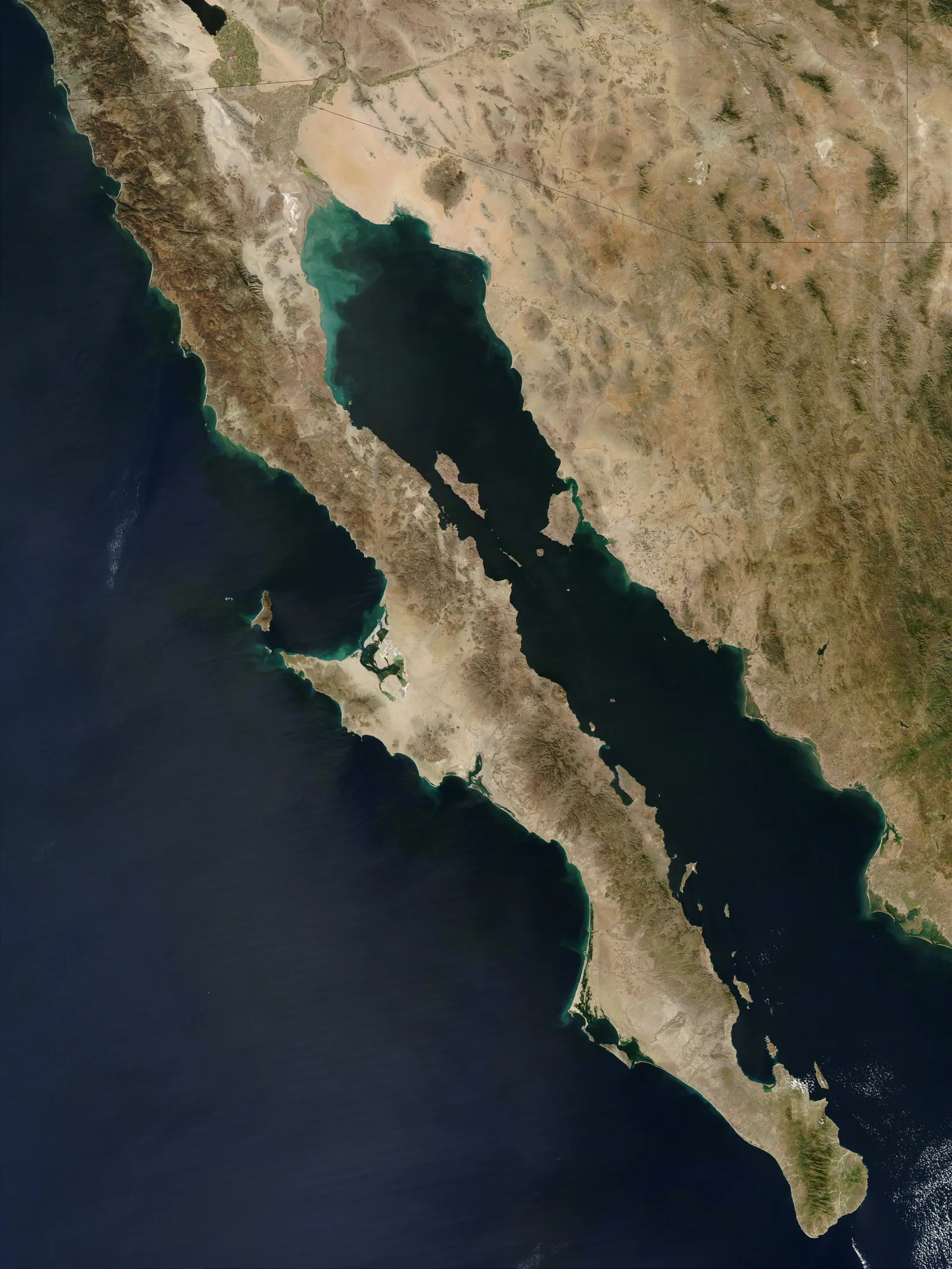
The Gulf of California — also known as the Sea of Cortez — separates the Baja California peninsula from the rest of Mexico. In 2005, UNESCO inscribed part of this gulf as a World Heritage site under the name “Islands and Protected Areas of the Gulf of California”: 244 islands and islets grouped into eight major island groups, plus other coastal and marine protected areas, stretching from the Colorado River delta to more than 270 kilometers southeast of the tip of the peninsula.
A sea born from a tear in the earth, not a flood
Unlike many gulfs, the Sea of Cortez is not simply low-lying land the ocean covered: it is a relatively young basin that is still opening up. According to the Monterey Bay Aquarium Research Institute (MBARI), the gulf formed only five to ten million years ago, when the Baja California peninsula began splitting away from the rest of Mexico.
The engine behind that tear is the same system that shakes California: the North American and Pacific plates slide past one another along a series of strike-slip faults that, at the northern end of the gulf, connect with the San Andreas Fault system. The motion hasn't stopped — MBARI notes the gulf is still growing wider and longer — making this stretch of sea one of the youngest and most tectonically active ocean basins on the planet.
Why is it called the "World's Aquarium"?
UNESCO’s own listing notes that this gulf was once called “the aquarium of the world.” The phrase is popularly attributed to Jacques Cousteau following his expeditions to the region in the mid-20th century, though no primary source precisely confirms the exact moment he said it.
An unusual level of biodiversity
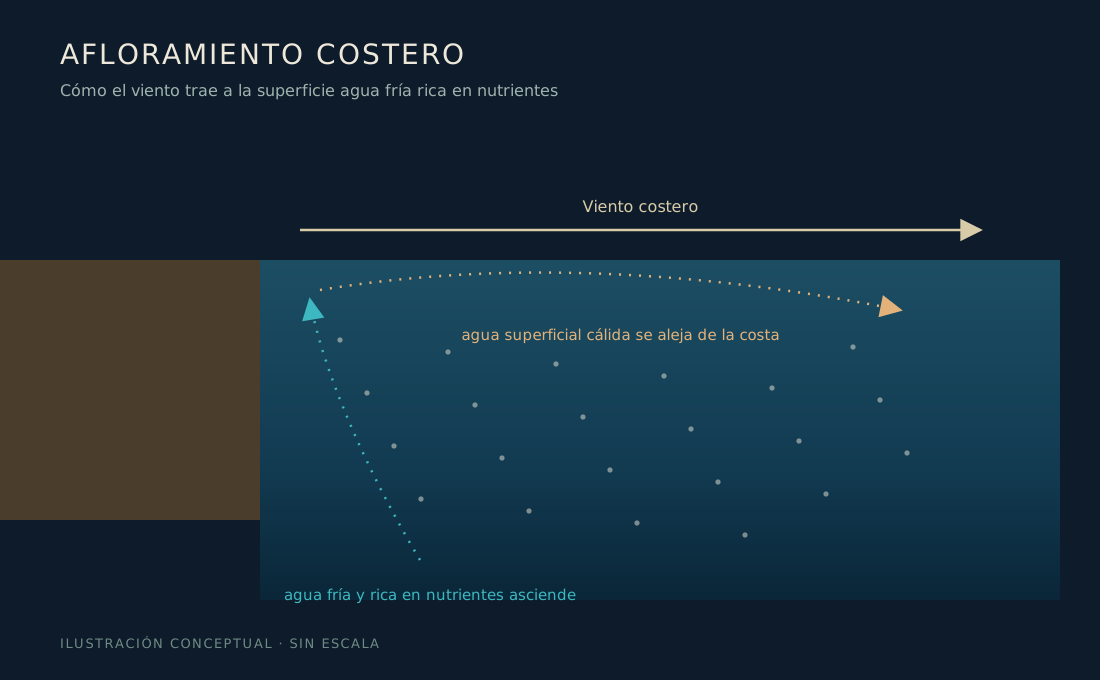
The gulf’s geography — narrow, deep in some areas and hemmed in by desert on both sides — favors coastal upwelling: wind pushes warm surface water offshore, making room for cold, nutrient-rich water to rise from below, the base of the food chain that supports almost everything you see on a marine expedition (see diagram).
That combination produces numbers few seas can match. According to UNESCO’s own listing, the gulf holds 891 documented fish species — 90 of them found nowhere else — and the site accounts for 39% of the world’s marine mammal species and a third of known marine cetaceans, from blue and fin whales to sperm whales and the vaquita, found nowhere else on the planet. On top of that are more than 4,900 already-described invertebrate species, with estimates suggesting thousands more remain uncatalogued.
A seafloor full of geological surprises
The same tectonic activity that opened the gulf still leaves its mark underwater. Off Cabo San Lucas, at the southern tip of the peninsula, a submarine canyon holds a phenomenon Jacques Cousteau filmed and helped make famous in the mid-20th century: currents of sand sliding down a near-vertical wall like a waterfall, driven by currents and upwelling in the area.
Further north, in the Guaymas Basin, the seafloor hides unusual hydrothermal vents. Unlike those that form at typical mid-ocean ridges, here the heat from magma passes through a thick layer of sediment rather than bare rock, turning the trapped organic matter into a kind of oil and sustaining communities of organisms adapted to both extreme heat and that hydrocarbon-rich environment.
A reserve that proved recovery is possible
Not all of the gulf’s recent history is cause for alarm. In 1995, the community of Cabo Pulmo, in the southeast of the peninsula, pushed for the creation of a national marine park around one of the gulf’s few rocky coral reefs, after watching decades of fishing empty its waters; in just over a decade, the reef’s fish biomass increased by 463%, one of the best-documented marine recovery stories in the world. Con Gorra’s diving expeditions in Cabo Pulmo largely trace the result of that recovery.
A gem with challenges
Not all of the story is good news. The IUCN’s conservation outlook for this site rated it of “significant concern” in 2017, largely due to the status of the vaquita, the most endangered marine mammal on the planet and a species found only in the northern gulf.
According to NOAA Fisheries, gillnets set to catch totoaba — another gulf-endemic species whose swim bladder is illegally trafficked — remain the main threat to the vaquita. The most recent counts are scarce: in 2025, monitoring teams observed between 7 and 10 distinct vaquitas, calves among them, indicating the surviving group is still reproducing. That figure is not an estimate of the whole remaining population, and the species remains technically on the edge of extinction, but authorities and scientists agree the decline has slowed in recent years. Telling that part too, not just the positive side, is part of documenting this region honestly.
From reading about it to living it
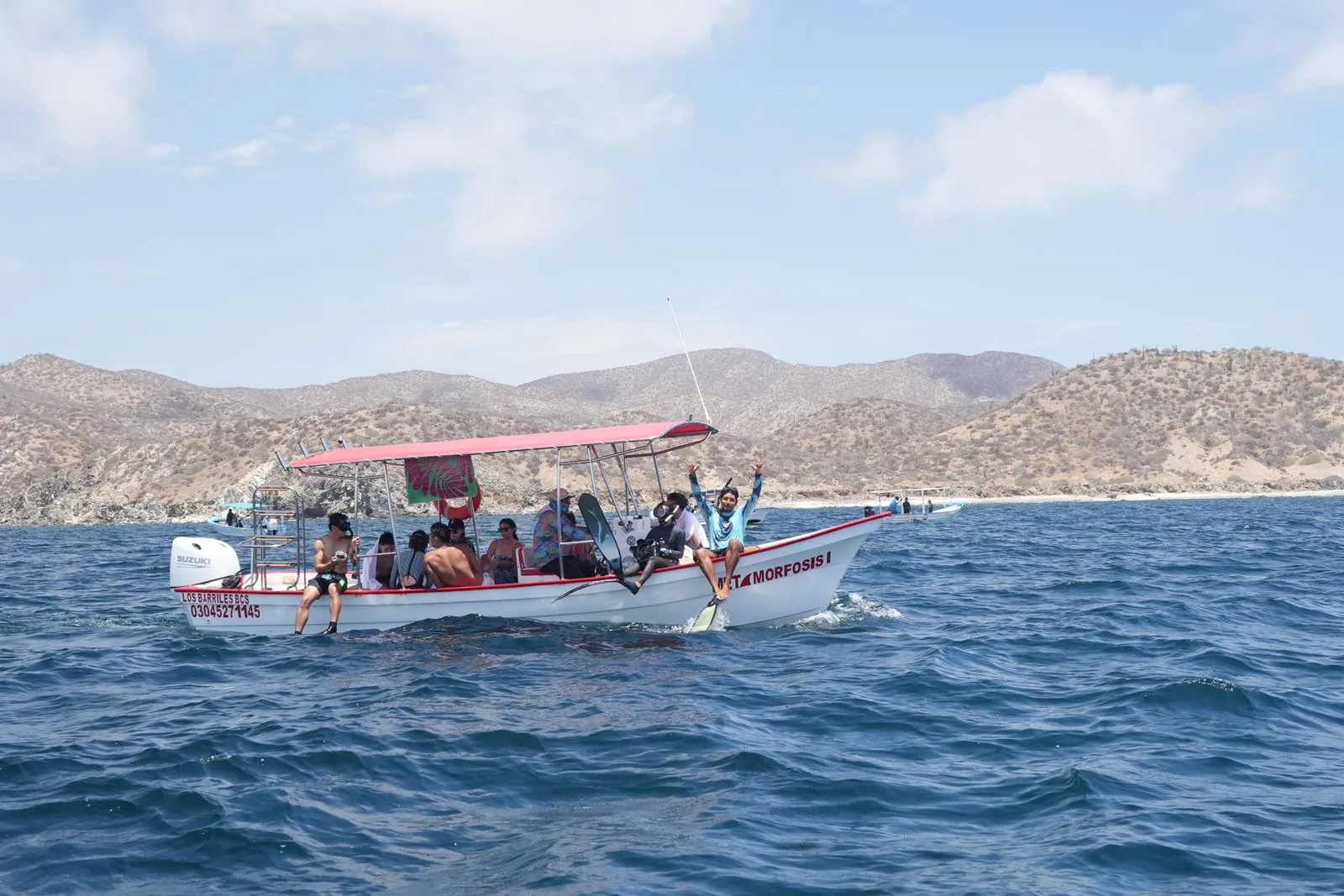
Con Gorra’s expeditions in Baja California Sur — from gray whale watching to diving in La Ventana and Cabo Pulmo — take place within this same region. Understanding its geological origin, its biodiversity numbers and its challenges helps explain why there is so much to see, and why it is worth taking care of.
References to keep exploring
- UNESCO · Islands and Protected Areas of the Gulf of California
- MBARI (Monterey Bay Aquarium Research Institute) · The geologic setting of the Gulf of California
- PLOS ONE · Aburto-Oropeza et al. (2011) · Large Recovery of Fish Biomass in a No-Take Marine Reserve
- NOAA Fisheries · Survivor: Vaquita Porpoises Escape Extinction Longer Than Expected
Sources accessed on 8 November 2026. Editorial text by Con Gorra Expeditions.