Marine life
Why does the humpback whale arrive in Baja California Sur in winter?
Every year, humpbacks leave behind cold, food-rich waters to breed in the Mexican Pacific. Science has a leading explanation, but not yet a closed answer.
From Alaska to the Mexican Pacific
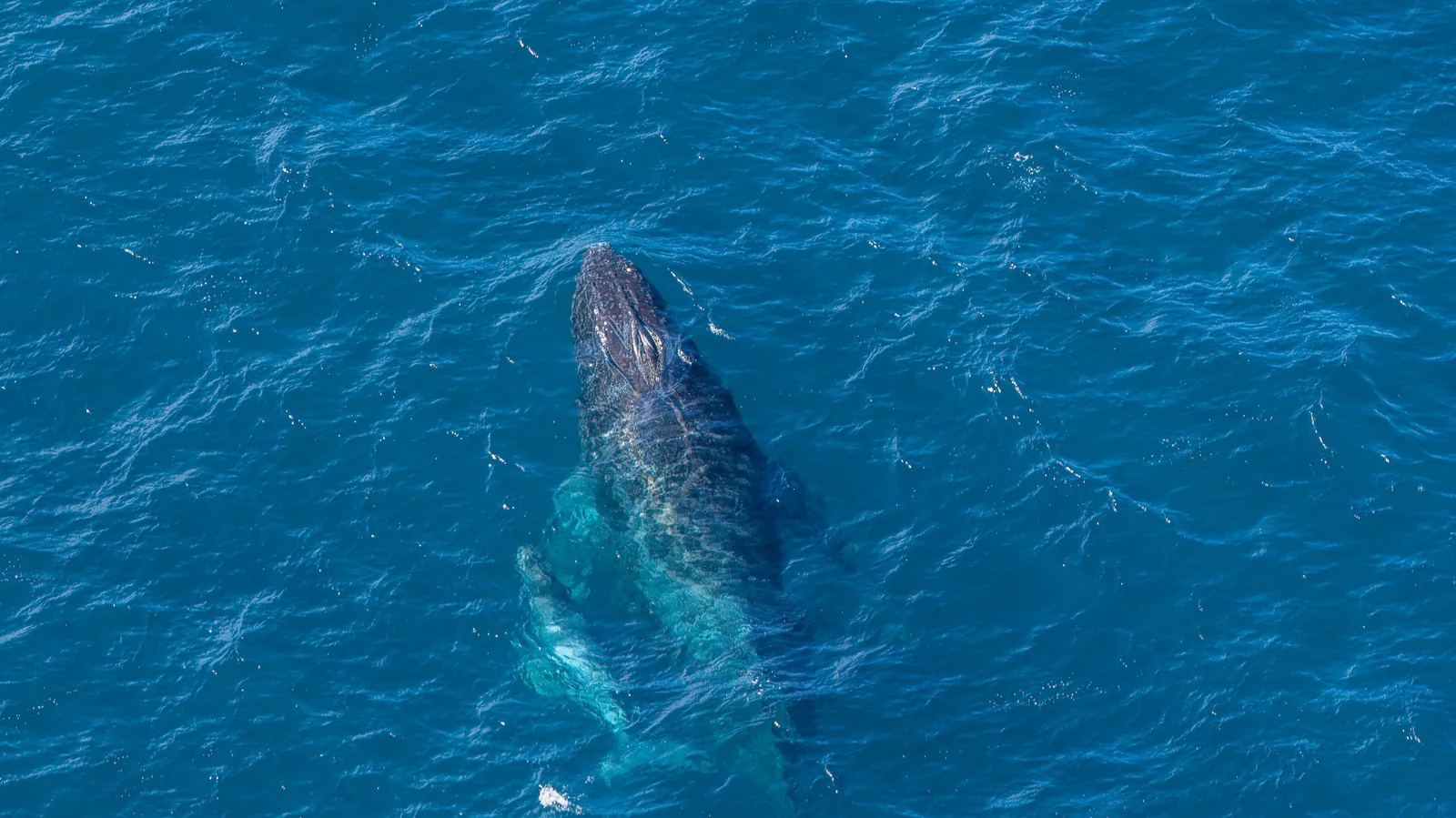
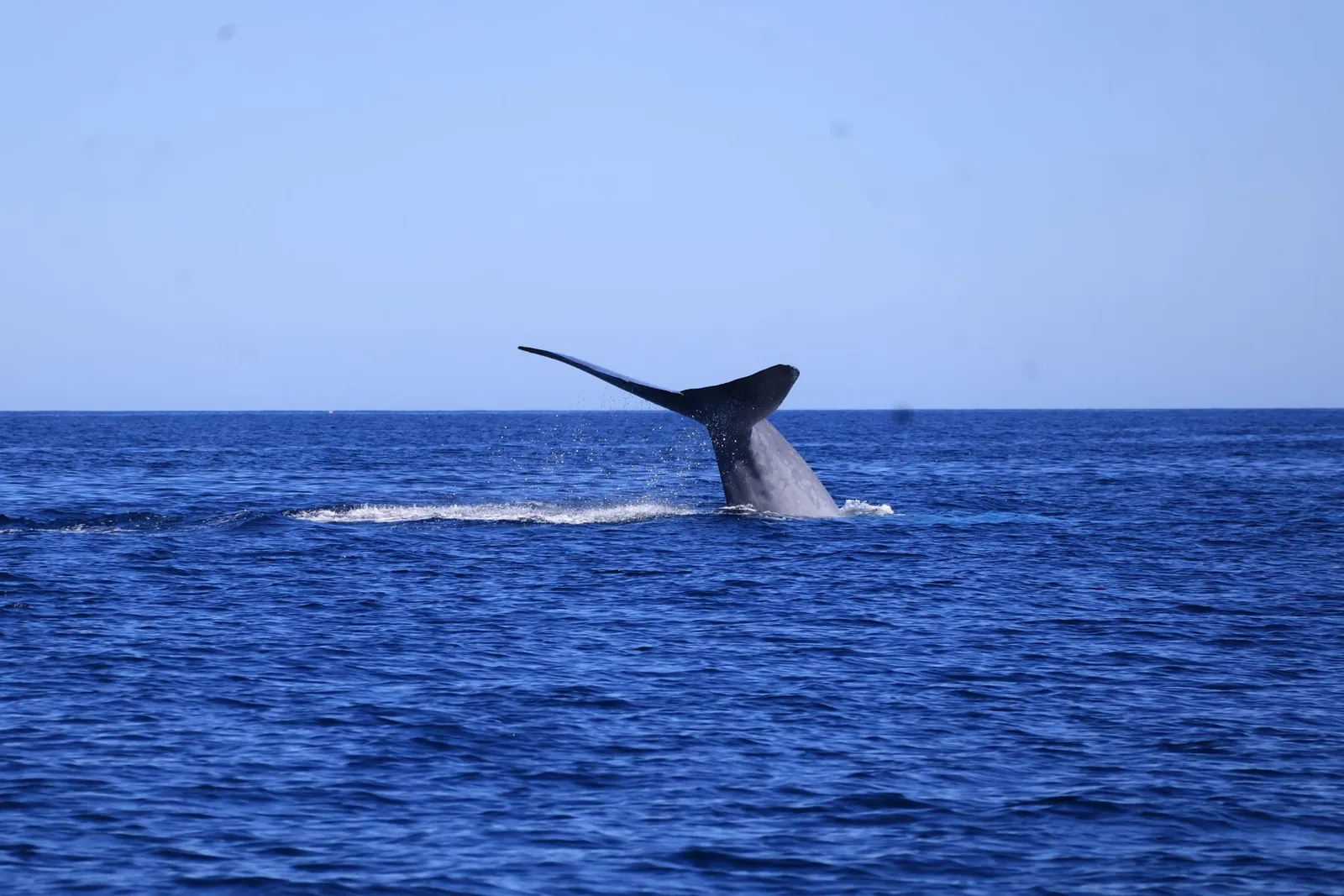
According to NOAA Fisheries, the North Pacific humpback whale (Megaptera novaeangliae) feeds in cold, productive waters ranging from California to the Aleutian Islands in Alaska. The population that winters in Mexico — recognized by NOAA as its own population unit, the "Mexico population" — breeds along the Mexican Pacific coast and the Revillagigedo Islands, and transits the Baja California peninsula along the way.
Some North Pacific humpbacks migrate up to 5,000 miles between their summer feeding grounds and their tropical mating and calving areas, one of the longest journeys known among mammals.
A journey on an empty stomach
Feeding grounds are cold and rich in krill and small fish; breeding grounds, by contrast, offer warm water and little food. According to the International Whaling Commission (IWC), humpbacks behave as "capital breeders": they build up fat reserves during summer and autumn, then draw on them to sustain migration and the breeding season, with little or no feeding during those months.
That means a humpback you see off Baja California Sur in season has likely gone weeks without feeding in any meaningful way.
Why warm water: a more open question than it looks
The most repeated explanation is that newborn calves, with little insulating fat, benefit from warm water to grow with less energy cost. It has been the leading hypothesis for decades, but a recent review found evidence complicating it: in the South Pacific, some mother-calf pairs kept migrating north shortly after birth, suggesting that giving birth doesn’t always mark the end of the trip toward the tropics.
In 2020, a team led by researcher Robert Pitman — then affiliated with NOAA’s Southwest Fisheries Science Center — proposed another idea, tested on Antarctic killer whales: that these animals migrate to warm water to renew their skin, something polar cold makes difficult by restricting blood flow to the body’s surface. The authors themselves suggest this could apply to other whales that migrate to the tropics, but the hypothesis has not been directly tested on humpbacks: for now it is a reasonable idea, not a settled answer.
A population with its own legal protection
The humpback population that visits Mexico is classified under the U.S. Endangered Species Act (ESA) as "Threatened" — a distinct, less severe category than the one assigned to other populations of the same species, such as the Western North Pacific population, listed as Endangered. We cover that legal distinction in more detail in our article on the humpback whale in Mexico.
What this means for a sighting in Baja
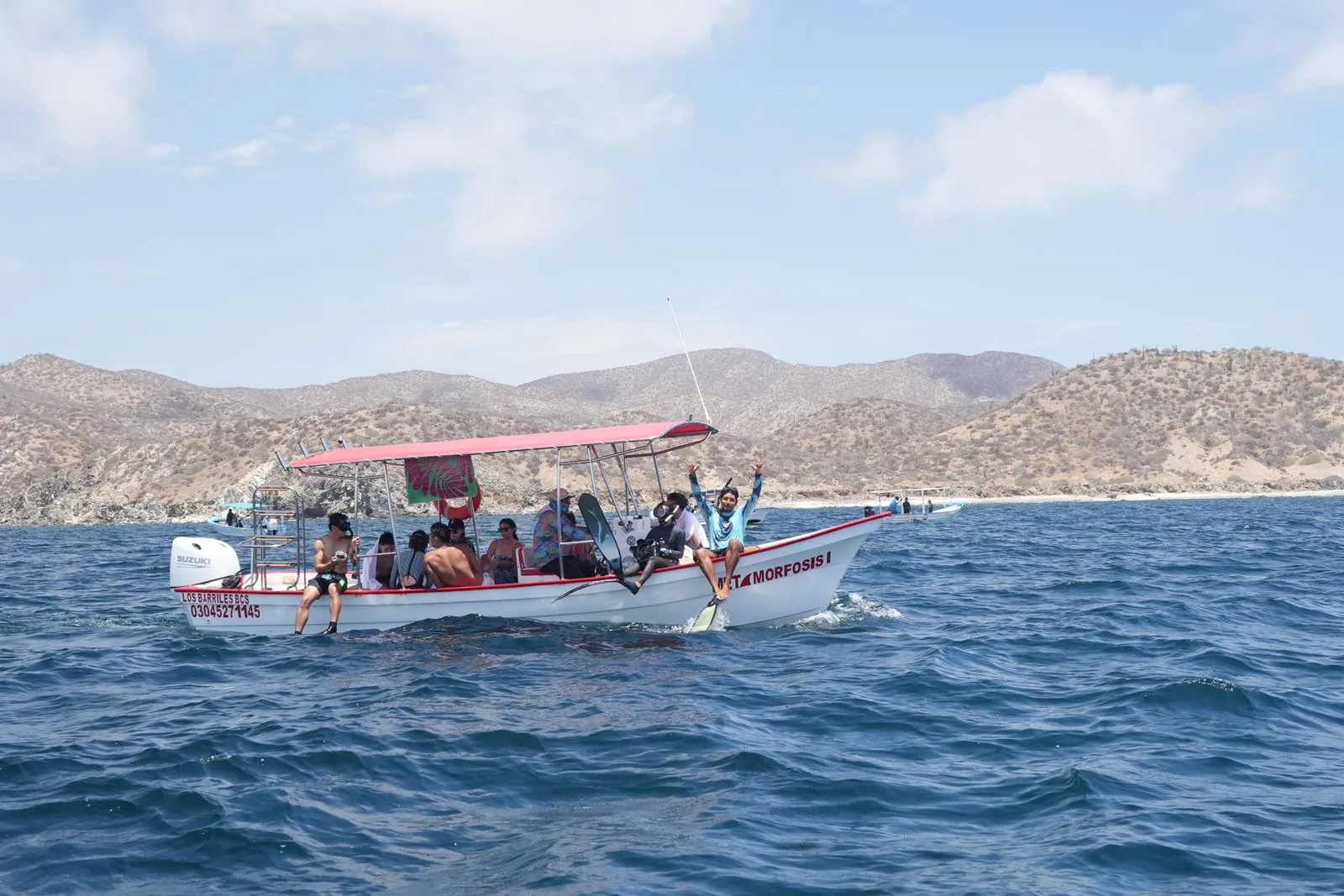
The whale-watching season in Baja California Sur — which covers both gray whales and humpbacks — usually runs from December to April, with some variation by year and location. Within that window, knowing which species you are looking at is not a minor detail: the shape of the back and the length of the pectoral fins help tell a humpback from a gray whale, as we explain in another article in this journal.
Whether or not you know which species to expect, it is worth remembering that the whale in front of your boat has likely gone months without eating, and traveled thousands of kilometers to be there.
References to keep exploring
- NOAA Fisheries · Humpback Whale
- NOAA Fisheries · Why Do Whales Migrate? They Return To The Tropics To Shed Their Skin, Scientists Say
- International Whaling Commission · Humpback Whale · Biology and Ecology
Sources accessed on 8 November 2026. Editorial text by Con Gorra Expeditions.